Blog has moved, redirecting... ...

Outcomes Based Assessment and Feedback Loops

Cynthia Nilsson~ Grade 9 Math/Science Pre-service teacher
Werklund School of Education

As a graduating student from the Werklund School of Education, experiencing my final practicum
experience at Connect Charter, one of my professional goals was to focus on assessment for learning in a real and meaningful way, rather than only assessment of learning. With the support and mentorship of Louis Cheng, I was able to gain experience in implementing assessment for learning in a Grade 9 Math/Science class, by combining feedback loops with outcomes based assessment.

Grade 7 Recycling Centre Geometry

How to build a recycling centre?

Our grade 7 students were tasked with designing a recycling centre for each of the 4 homerooms in Geometer's Sketchpad. The result was a net that they printed onto a regular sheet of paper. Students then recreated the boxes from the printout to become scaled versions of the original.
their hallway. To begin the process they deconstructed a box and plotted the lengths, angles and shapes into

Magic Spots and Earth Walks

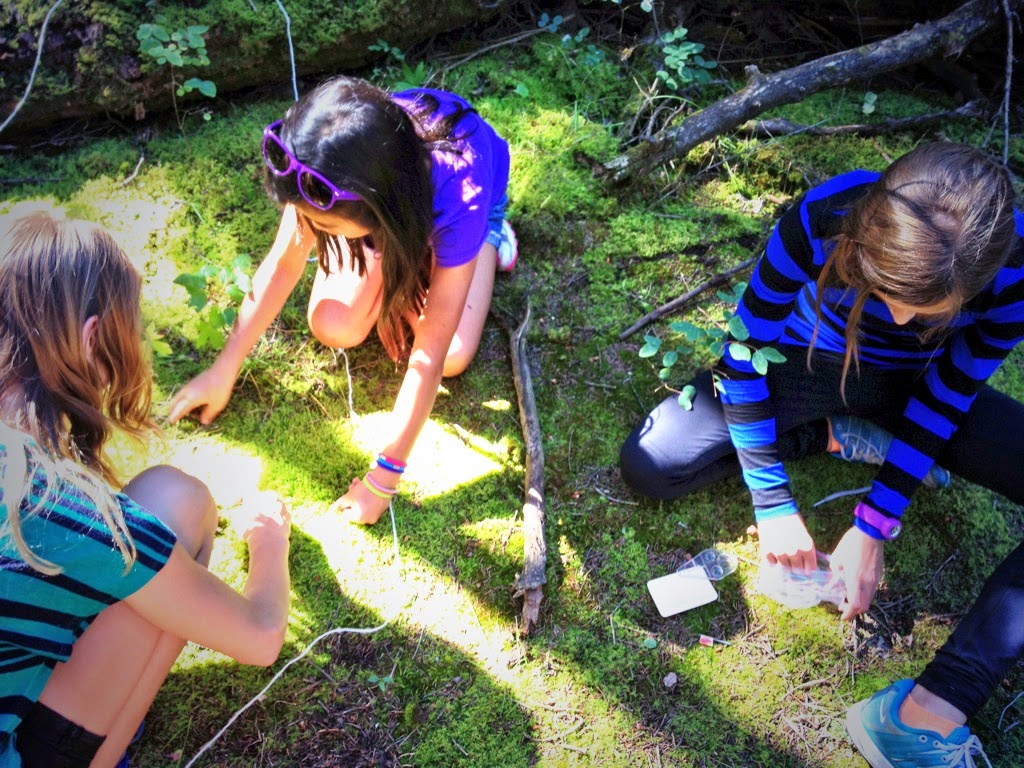
Here is a blog post that highlights some simple activities you can do with your students to get outside in the beautiful spring weather and have them investigating the natural world.  These activities can be done in your school yard or in a nearby natural area.

Since our early days the Calgary Science School has provided outdoor and environmental education experiences at Camp Sweet which is near Olds, Alberta. The camp, developed by former Calgary Science School principal Ron Sweet, has been used for the past 10 years to provide highly successful learning experiences for all CSS students in grades 4 to 9.

Each grade has two overnight camps per year where at least one of them is held at Camp Sweet. Our grade 7 students attended the 3-day and 2-night camp on their second week of school this year!

Science Communication Opportunity

Our Science Communication Club are looking for opportunities to share their knowledge and demonstrations this spring. We would like to support their hard work in helping to find schools, centres, malls or other venues where they can safely demonstrate some of what they have been working on this year. 
If you are interested in hosting our club or have questions about the project, please email dan.m@connectcharter.ca

Student Learning Plans: Choosing a Platform

The Quest for the “Perfect” Platform at Connect

Through formal and informal conversations with colleagues, students, parents, and administrators over the past two years we have determined the characteristics necessary in a platform for our student learning plans (SLP's). Although recognizing some classes at Connect house their SLP’s in binders and duotangs (as a paper format), we realized early on in our process that a digital platform was critical in ensuring information is easily transferable between and amongst all stakeholders. Asking questions such as: What are the different platforms available? And, what are the strengths and weaknesses of each? were important in our process to find a platform that would meet the majority of student, parent, and teacher needs. The specific characteristics we felt were most important to our school were the following:

  • Security
  • Access - ipad/laptop & home/parents/teachers
  • User friendliness
  • Transferability between grades & years
  • Clear visual/clean...easy to view
  • Good “fit” with our Exemplary Learning Framework (ELF) … re: its set-up (Please see our previous blog post discussing our ELF and SLP’s)
  • Individuality/Personalization
  • Cost
  • Options
  • Multimedia options
  • Living/easy to edit or change
  • Age appropriate features

Energy Diet- A student post

Our grade 4 and 7 classes are collaborating this year in the Classroom Energy Diet Challenge. The students have been assembled into small combined teams where each takes up the different challenges. Our grade 7 students have taken up these leadership roles, and below is a blog post written by a grade 4 and 7 pair. They could earn up to 15 points for their team!

Energy Diet (Letter to the editor)
By: T and P

What are different types of energy sources? And which one is best for our environment?

Sun

Solar panels generate electricity from the sun. The old solar panels were made of silicon and now solar panels are made from cheaper crystals but do not work as well as silicon. Solar power is made when the suns light hits the solar panel, the electrons in the silicon get up and move instead of just jiggling in place to make heat.

An Inquiry into Words and Spelling

-by Abby Saadeh

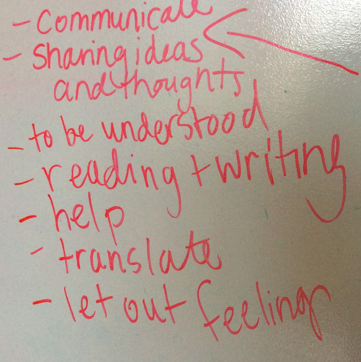
In an Inquiry based environment, we get excited and enveloped in our questions and ideas. At Connect Charter we want to take these opportunities to incorporate Spelling into our explorations and develop skills into our practice. Together with the Grade 4 Humanities team, we identified a need to develop some ideas on how to approach Spelling. I gave the students a Spelling Questionnaire that would give me more information about how they felt about Spelling and what they thought about themselves as Spellers. From the information gathered, I came up with the first discussion question, “What is Spelling?” And, “If we made Spelling important, what would it look like?” This is what the students came up with.

Class Brainstorm
Screen Shot 2014-02-26 at 11.35.50 AM.png

Next, we discussed words that they found interesting or were curious about because of the way they sounded or simply by the way they looked or how they sounded. I encouraged them to talk to each other about words that they found difficult, words that they continuously spelled wrong, or words that they spelled wrong in their previous assignments. We decided that we could get the words from anywhere, as long as they give reasons why they chose them, it could be from their writing, reading, signs, television...anywhere. We came up with a list of words that answered these questions and began to explore them.


Inquiry and Assessment in Inquiry: Views from an Internationally Trained Teacher

By Joanne Eloho~ Werklund School of Education Bridge to Teaching Program

It was quite the experience partnering with Ms. Pereverzoff at the Connect Charter School, (formerly Calgary Charter School) to teach her seventh grade class in my first practicum as a Bridge to Teaching student from the Werklund School of Education. As an internationally trained teacher, I expected to find significant differences in Alberta classrooms and there was no surprise there, however, I have found that learning through inquiry is such an extreme deviation from my more traditional practice of teaching. For the first time in my practice, I was actively encouraging students to assume more responsibility for their learning and they were working to meet that expectation. I was stepping back and allowing them the opportunity to expand their knowledge by exploring the curriculum through their interests. Inquiry, from what I have experienced in five short weeks, is indeed an innovation in how we want our students to learn; ultimately as teachers our aim is to help students develop as independent, critical thinking citizens of society, inquiry not only initiates the process, it affords every student the opportunity to be independent and think critically by stressing the importance of the “Why” in whatever it is students are learning.

Underwater ROV Elective

This term we offered students in grade 6 and 7 an Underwater ROV elective. In this elective students design, build and test an underwater Remotely Operated Vehicle, or ROV. ROVs are used for a variety of reasons, including marine biology research, military applications, underwater archeological exploration and more.

Students used PVC pipe, wires, 12 volt DC motors, batteries and other supplies to construct their ROV. Propellers were designed in Google Sketch Up and printed on our MakerBot 3D printer. In the end we found a propeller design online and printed several to provide students the best chance for success on testing day in the Mount Royal University pool.


Property of Air Demonstrations, Grade 6

-by Erin Couillard, Lisa Nelson, Carolyn Armstrong and Carly DeBoice

For our Aerodynamics and Flight unit this year, we decided to begin with students gaining an understanding of the properties of air, as outlined by the Alberta Program of Studies. To do this, students would be paired with a peer and assigned a property of air to investigate. They would then choose a demonstration that best explains/proves that specific property of air.

To begin with, we chose a small demonstration to do for them. This had two purposes. First, to construct a criteria around what an effective science demonstration looks like and second, to start digging into the properties of air. The demonstration we chose was to prove the existence of oxygen in the air by lighting two candles and then placing a jar over one of them. Students predicted what would happen and then attempted to explain why it happened and to indicate the property of air that it proved.

After observation and discussion, students co-constructed the following criteria around “What makes an effective Science demonstration”:
• Facing Audience
• Speaking loudly with enthusiasm and inflection
• Knowing your information
• Proving something with visual evidence
• Explaining each step
• Asking audience to make a prediction, giving them time to think
• Asking audience “Why”?
• Asking audience for observations

 Next, students will practice their demonstration to gain feedback from peers, teacher and parents (at student-led conferences) prior to creating a video of their demonstration for final assessment and sharing. Throughout this process each group will gain an understanding of all of the properties of air through learning how to write observations and conclusions. We will also be co-constructing criteria around observations and conclusions to ensure that each student has an understanding of the expectations. Stay tuned for more blog posts as we work our way through the unit(s).

Up next!
• Wind tunnel engineering project (see blog posts from previous years here and here)
• Parachute Design
• Paper Glider experiments

What are you doing for your Aerodynamics and Flight units? We would love to know! 

Master Chef Electricity Challenge, Grade 9

-by Louis Cheng and Cindy Nilsson

Today the grade 9 students were given a series of instructions to complete a Master Chef Electricity Challenge.

In teams of four, they were provided a box of electrical supplies and had 10 minutes to begin researching how to build some circuits.  After their research time, they had to put away their laptops and textbooks to attempt to build the following:

Profiling SLP’s - Student Learner Profiles at Connect!

Tanya Stogre and Abby Saadeh

Students and teachers at Connect Charter School have focused on creating Student Learner Profiles (SLP) for the past few years. More recently, at Connect, these SLP’s have become a more significant focus. In the spirit of Personalized Learning from the Inspiring Action on Education, SLP’s are gaining momentum in Alberta. See http://education.alberta.ca/teachers/aisi/themes/personalized-learning-.aspx for more information on this provincial initiative.

With greater time and attention being placed on SLP’s, it is important for us to have discussions regarding the ways they might inform and impact learning at our school. Over the course of the past few years, each grade has explored a variety of platforms to house these profiles. In our second blog post, we will further discuss the strengths and limitations of some of the platforms available, but first we would like to discuss what a Student Learner Profile (SLP) is and why they are important.

Connect Board Retreat

It's never just an ordinary day: Directors cut
Ashley Nixon- Connect Charter School Board Member.

Tessellation shown in this pavement
 mosaic from Rio de Janiero, Brazil.
 It was a privilege to spend my afternoon visiting classrooms and interacting with students and teachers at the Connect Charter School, Calgary on Friday. Two students, Will and Oman, guided myself and other Board Directors in and out of various learning places, the "field survey" part of the review of the school's strategic plan "Lead, Share, Transform" conducted annually.

The tour began with an iPad training session in the library led by some young experts from Grade 6. I came away knowing more about how to pull similar apps together and grab images from the web. Geometry was under exploration in Grade 5, where I saw students shaping their own learning through turning, translating, even tessellating objects.

Grade 7 Canadian History: Post 2

Jody Pereverzoff and Chris Dittman - Grade 7 Humanities

In our last blog post, we described the genesis of our Grade 7 Humanities project focusing on early Canadian (pre-confederation) history. We left off with students having just determined the most historically significant event in their debate group, each of which consisted of 4-5 students, each seeking to prove the historical significance of their specific event.  

We were left around 5 events in each of the 4 classes. Our focus now was to return to our original inquiry question; Why do so many Canadians know and care so little about our nation’s history?  We returned to our original class brainstorm around the importance (or lack of) of knowing Canadian history.  Specifically, we drew students’ attention to the reasons they gave for a lack of interest.  These included:

  • History is boring
  • People have studied events in history, but often forget
  • Events are not relevant

A Principal's Perspective: Back to Basics

Darrell Lonsberry - Connect Charter School Principal

It seems as though the pendulum is swinging once again, this time motivated by some people who are espousing a back to basics approach to mathematics education, in large part as a response to the most recent PISA results. I don't want to remain mute on this, as mathematics education is near and dear to my heart. One of the difficulties in using results from standardized tests such as PISA, TIMSS or PIRLS to compare nations on the quality of their educational systems, and even in determining change over time within a single system, is that these tests often do not measure those things that teachers would say are most important. While some may purport to measure these things, I haven't yet run into a standardized tests that adequately and appropriately measures a student’s ability to think creatively, to persevere in a challenging task (these international tests are all timed), to collaborate through a problem, to use research strategies to find missing information, to share their learning in novel and effective ways, to access expertise when it is required, etc. I don't want to come across as trying to justify lower results by blaming the test, but in considering the results we must also look at what students are actually being asked to do.

Grade 7 Canadian History

Jody Pereverzoff and Chris Dittmann- Grade 7 Humanities


We invited David Scott, a former CSS teacher, to collaborate on a unit to engage students in early Canadian history and provide students an opportunity to wrestle with why we learn history and whether history is important to understand. We asked ourselves what most Canadians think of history in general, and Canadian history specifically. We came upon the government’s Heritage Minister lamenting the fact that Canadians do not know our own history. He went so far as to call this current situation a future threat to Canada as a country. We read this article as a class and students offered their reactions to it: http://www.huffingtonpost.ca/2013/06/11/country-in-jeopardy-if-ca_n_3422683.html.

Professional Networking Day for Outdoor Education teachers

Deirdre Bailey (Connect Charter), Jason Lindsay (Calgary Arts Academy) and David Manning (Westmount Charter)

“Passion is lifted from the earth itself by the muddy hands of the young; it travels along grass-stained sleeves to the heart. If we are going to save environmentalism and the environment, we must also save an endangered indicator species: the child in nature.” 
Richard Louv -  Last Child in the Woods
In collaboration with Outdoor Education specialists from the Calgary Arts Academy and Westmount Charter, Connect Charter School (formerly the Calgary Science School) is hosting a Professional Networking Day for Outdoor Education teachers on Monday, February 3, 2014. The intent to provide an opportunity and location for Calgary and area based Outdoor Educators to connect, share their unique approach to OE programming, and extend their professional community of practice. The primary purpose of the day is to allow attendees to share elements of their practice and in return, leave the day with new resources and contacts. Our goal is to allow for collaboration and feedback from a wide range of colleagues and mentors and to allow OE teachers to broaden their professional network in order to improve practice and advance the learning of colleagues.

Grade 9 Identity Poetry Anthology

WHO AM I?: Identity Poetry Anthology Version 2.0 
Jaime Groeller and Ivy Waite- Grade 9 Humanities

Ivy and I are very excited to once again be team teaching grade 9 Humanities this year. We taught this curriculum in our first year together, went back down to grade 8 for our second, then looped back into grade 9 with the same students for the 2013-2014 school year. We went back to our year plan from our first time through grade 9, looked through the projects we created and adapted, and in doing so decided to begin the year once again with a poetry unit on “identity”, an important guiding concept in the grade 9 social studies curriculum. We love this project because it also allows us to meet some ELA objectives and have the students interact with poetry beyond merely “analyzing.” Armed with our detailed reflections from last time, we worked to adapt the activities and projects we used before to meet the needs of our current group of students, and also to improve upon certain aspects of the inquiry. The assignment sheet and graphic organizer look very similar to last time, but we did make some significant changes to how we approached this study, as well as the organization of the anthology itself.

Evolution of Inclusive Practices at Connect Charter School

Abby Saadeh ~ Inclusive Practices Coach

When starting the position of the Inclusive Practices Coach at Connect Charter School in 2012, I was
asked time and time again, “What does Inclusive Practices mean exactly?” And to be honest, at first
there was a struggle to give it a definition. After months of work in this position I have realized that this is a field that is constantly evolving and adapting to respond to the needs of our school.

Some of the things that I learned over the past few years are that it is not only about making sure that every student has an opportunity to learn, it is a proactive process with the intention of valuing and motivating learners while fostering and advocating for their independence in an environment where everyone can feel safe and accepted. How we do this, starts with understanding who our students are. We do this through Learner Profiles, relationship building, Student Resource Group Meetings, past history, student and parent interviews, STAR reading assessments etc. Then, partnered with students and parents, we mutually agree on goals, and come up with an implementation plan that is tailored to the individual student’s learning style.

Grade 5 Genius Hour

Calgary Science School
Grade 5 Team

Framework for Student Learning Graphic
The Grade 5s are excited to be starting Genius Hour this year! Every day 3 we will be dedicating 80 minutes to Genius Hour work, providing students with a voice in what they want to learn, promoting their passions and encouraging creativity. Students will be expected to be prepared and to use this time effectively.

Genius Hour is tightly linked with objectives outlined by Alberta Education in their document Framework for Student Learning:

Genius Hour will help develop life skills such as planning, teamwork, meeting timelines, and following through on commitments. This experience will inspire self-direction, pride and responsibility in each student.